




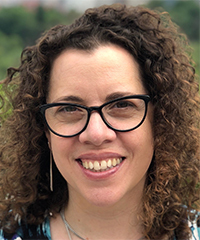
Susannah B. F. Paletz
- Media Contact
I combine my fundamental psychology training with my applied field experience to identify and untangle social and cultural factors affecting teamwork and creativity, particularly in multidisciplinary and/or multicultural teams. I have developed expertise in several areas, including the social psychology of team creativity, knowledge diversity in teams, and cross-cultural psychology. My research on teams has been applied to science, engineering, and aerospace domains. I have collected and/or analyzed survey, experimental, interview, archival, social media, and audio-video observational data, using a variety of statistical and methodological techniques. In general, I also conduct applied psychology research in service of the nation on a range of topics.
I completed both the Psychology major and the Science in Society program at Wesleyan University (1994, Phi Beta Kappa), receiving High Honors on my thesis examining student attrition from science and mathematics majors. After college, I worked as a research assistant for Dr. William McAuliffe at the National Technical Center for Substance Abuse Needs Assessment (now called the North Charles Foundation) in Cambridge, Massachusetts. I earned my M.A. (December 1999) and Ph.D. (December 2003) in Social/Personality Psychology at the University of California, Berkeley. I studied social and personality effects on group creativity with Dr. Maslach and co-authored a paper with Dr. MacCoun on bias in the interpretation of scientific evidence. My dissertation, which was funded by an NSF East Asia fellowship, a Northern California Phi Beta Kappa scholarship, and a Sigma Xi grant-in-aid, assessed lay theories of creativity using original survey data from Japan, China, and the United States with Dr. Kaiping Peng.
From March 2004-August 2008, I was a civil servant Research Psychologist at NASA Ames Research Center. There, I researched team composition and cohesion, organizational risk factors, individual and team selection, and aviation decision-making. I worked in the Distributed Team Decision Making laboratory and the Human-Computer Interaction (HCI) laboratory, collaborating with Drs. Judith Orasanu, Christopher Bearman (now at Central Queensland University), Alonso Vera, Irene Tollinger, Yuri Tada, and others. My work in the HCI laboratory earned me Ames Spotlight Awards; the HCI lab's work on improving problem reporting software and processes resulted in the whole team receiving Group Achievement Awards from Johnson Space Center and Ames Research Center.
From 2008-2011 I was a postdoc, and then from 2011-2013 a principal investigator and research associate at the Learning Research and Development Center at the University of Pittsburgh, funded by National Science Foundation (NSF) grants via the Science of Science Innovation and Policy Program. I continue to collaborate with Drs. Christian Schunn and Joel Chan (now at the University of Maryland's iSchool) from there. I also learned from and collaborated with Kevin Kim in the education department, who is now deceased. With these colleagues, I annotate and statistically analyze conversations to examine the interplay of social and cognitive micro-events within teams. With Chunchi Lin at the National Taiwan University and Ella Miron-Spektor at Technion University (Israel), I have developed and am testing a model of interpersonal conflict and cognition in multinational groups and settings.
In May 2013, I joined the University of Maryland's Center for Advanced Study of Language (CASL) as an Associate Research Scientist, studying culture, group processes, and creativity, among other topics. In October 2017, I was promoted to Research Scientist and the Technical Director for Organizational Behavior and Performance. I work on a range of government-sponsored projects touching on inter- and intra-group dynamics, persuasion, social unrest, and shared meaning; validation of measures; cross-cultural psychology; industrial-organizational topics; and others. For example, I was the most recent Principal Investigator on the Regional Proficiency Assessment Tool (RPAT) project, working with a cross-disciplinary team to validate and improve the RPAT. Since 2017, I have been researching why people share information on social media with a different cross-disciplinary team.
As of March 2019, I am a Research Professor at the University of Maryland's College of Information Sciences (iSchool), and in 2021 became an Associate Professor.
Primary Interests:
- Applied Social Psychology
- Communication, Language
- Culture and Ethnicity
- Group Processes
- Interpersonal Processes
- Judgment and Decision Making
- Organizational Behavior
- Research Methods, Assessment
- Social Cognition
Research Group or Laboratory:
- Center for Advanced Study of Language (CASL)
Note from the Network: The holder of this profile has certified having all necessary rights, licenses, and authorization to post the files listed below. Visitors are welcome to copy or use any files for noncommercial or journalistic purposes provided they credit the profile holder and cite this page as the source.
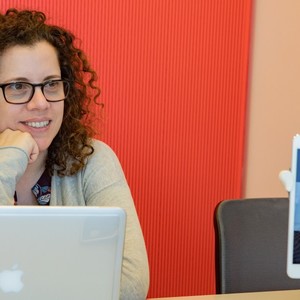
Video Gallery

Emotions in Social Media: Computational Social Science Needs Good Social Science
Description
2023 Human-Computer Interaction Laboratory Symposium: Plenary Talk by Susannah Paletz
Adapting an Emotion Annotation Guide from the US to Poland and Lithuania
Journal Articles:
- Bearman, C., Paletz, S. B. F., Orasanu, J., & Thomas, M. J. W. (2010). The breakdown of coordinated decision making in distributed systems. Human Factors, 52, 173-188.
- Chan, J., Paletz, S. B. F., & Schunn, C. D. (2012). Analogy as a strategy for supporting complex problem solving under uncertainty. Memory & Cognition, 40, 1352-1365.
- Miron-Spektor, E., Paletz, S. B. F., & Lin, C.-C. (2015). To create without losing face: The effects of face cultural logic and social-image affirmation on creativity. Journal of Organizational Behavior, 36, 919-943.
- Paletz, S. B. F., Bearman, C. R., Orasanu, J., & Holbrook, J. (2009). Socializing the Human Factors Analysis and Classification System (HFACS): Incorporating social psychological phenomena into a human factors error classification system. Human Factors, 51, 435-445.
- Paletz, S. B. F., Chan, J., & Schunn, C. D. (2017). The dynamics of micro-conflicts and uncertainty in successful and unsuccessful design teams. Design Studies, 50, 39-69.
- Paletz, S. B. F., Chan, J., & Schunn, C. D. (2016). Uncovering uncertainty through disagreement. Applied Cognitive Psychology, 30, 387-400.
- Paletz, S. B. F., Kim, K. H., Schunn, C. D., Tollinger, I., & Vera, A. (2013). Reuse and recycle: The development of adaptive expertise, routine expertise, and novelty in a large research team. Applied Cognitive Psychology. DOI: 10.1002/acp.2928.
- Paletz, S. B. F., Miron-Spektor, E., & Lin, C.-C. (2014). A cultural lens on interpersonal conflict and creativity in multicultural environments. Psychology of Aesthetics, Creativity, and the Arts, 8, 237-252.
- Paletz, S. B. F., & Peng, K. (2009). Problem finding and contradiction: Examining the relationship between naive dialectical thinking, ethnicity, and creativity. Creativity Research Journal, 21, 139-151.
- Paletz, S. B. F., & Peng, K. (2008). Implicit theories of creativity across cultures: Novelty and appropriateness in two product domains. Journal of Cross-Cultural Psychology, 39, 286-302.
- Paletz, S. B. F., Peng, K., Erez, M., & Maslach, C. (2004). Ethnic composition and its differential impact on group processes in diverse teams. Small Group Research, 35, 128-157.
- Paletz, S. B. F., Peng, K., & Li, S. (2011). In the world or in the head: External and internal implicit theories of creativity. Creativity Research Journal, 23, 89-93.
- Paletz, S. B. F., & Schunn, C. (2010). A social-cognitive framework of multidisciplinary team innovation. Topics in Cognitive Science, 2, 73-95.
- Paletz, S. B. F., Schunn, C. D., & Kim, K. H. (2013). The interplay of conflict and analogy in multidisciplinary teams. Cognition, 126, 1-19.
- Paletz, S. B. F., Schunn, C. D., & Kim, K. H. (2011). Intragroup conflict under the microscope: Micro-conflicts in naturalistic team discussions. Negotiation and Conflict Management Research, 4, 314-351.
- Paletz, S. B. F., Sumer, A., & Miron-Spektor, E. (2018.) Psychological factors surrounding disagreement in multicultural design team meetings. CoDesign, 14, 98-114. DOI: 10.1080/15710882.2017.1378685.
Other Publications:
- Paletz, S. B. F. (2011). Project management of innovative teams. In M. Mumford, (Ed.), Handbook of organizational creativity (pp. 421-455). San Diego, CA: Academic Press.
- Paletz, S. B .F. (2009). Individual selection and crew assembly: A gap analysis for exploration missions. In S. B. F. Paletz & M. K. Kaiser (Eds.), Behavioral health and performance technical gap analysis white papers (NASA Technical Memorandum NASA/TM—2009-215381, pp. 141-198). Moffett Field, CA: National Aeronautics and Space Administration Ames Research Center.
- Paletz, S. B. F., Bogue, K., Miron-Spektor, E., & Spencer-Rodgers, J. Dialectical thinking and creativity from many perspectives: Contradiction and tension. (In press). In J. Spencer-Rodgers & K. Peng (Eds.), Psychological and cultural foundations of dialectical thinking. Oxford University Press.
- Paletz, S. B. F., Pavisic, I., Miron-Spektor, E., & Lin, C.-C. (In press). Diversity in creative teams: Reaching across cultures and disciplines. To be in L. Y.-Y. Kwan, S. Liou, & A. K.-Y. Leung (Eds.), Handbook of culture and creativity: Basic processes and applied innovations. Oxford University Press.
Courses Taught:
- Survey and Cross-Cultural Research Methods
- Teams and Organizations
Susannah B. F. Paletz
College of Information Sciences
4130 Campus Drive
0201 Hornbake Library
College Park, Maryland 20742-4345
United States of America
